Homestead & South Dade
Putting Green Installation in Homestead, FL
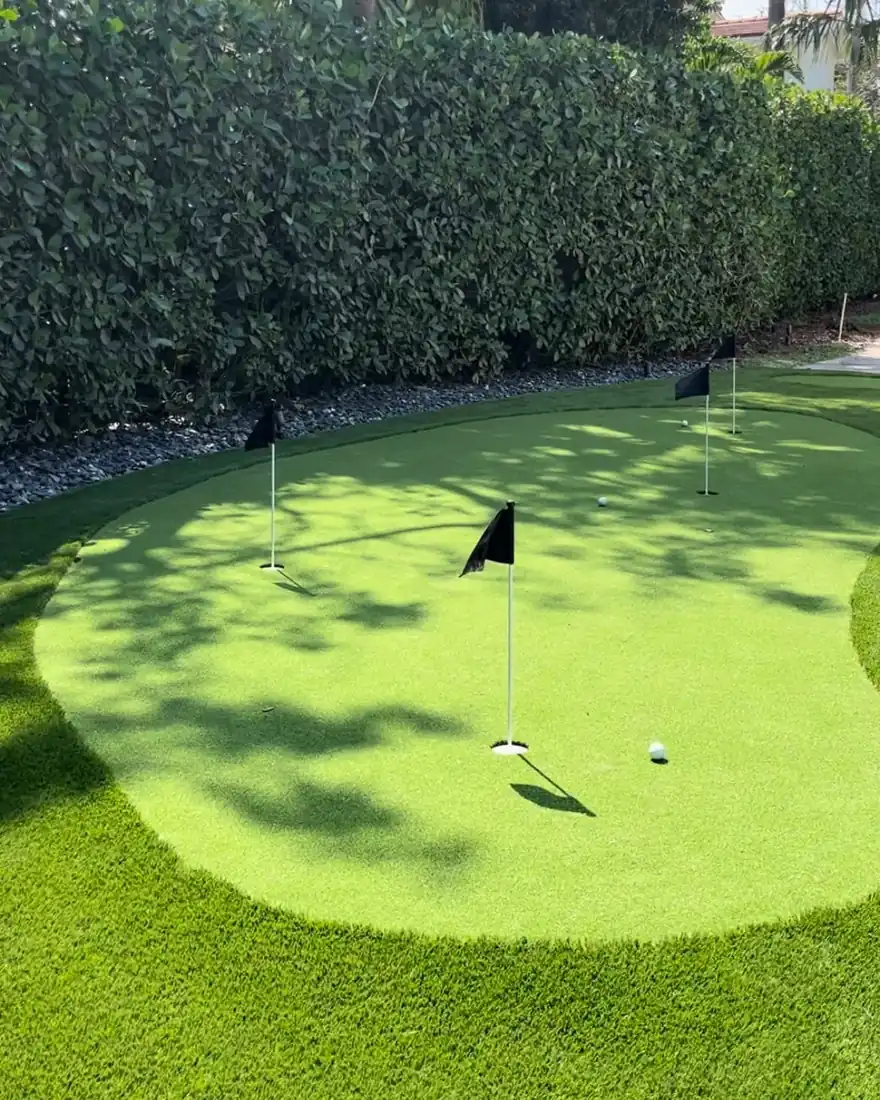
The putting green you will use most is the one twenty steps from your back door. Greene & Stone Outdoor installs backyard putting greens in Homestead and South Dade: synthetic greens with contours shaped into the base, regulation-size cups, and a fringe to chip from.
The real problem
Why Some Backyard Greens Never Get Used
A green that is dead flat, too slow, or too small to hold more than one putt gets old in a week. The greens that get used have a few subtle breaks, a ball speed close to the course, and two or three cups that change the look of every putt. Those are decisions about the base and the turf.
- “I want to practice putting without driving to the course.”
- “The putting mat in the garage does not roll like a green.”
- “My neighbor's green is flat and the ball bounces.”
- “I do not know how much room a green needs.”
- “I want a chipping area too, if it fits.”
- “It has to look good from the patio when nobody is playing.”
What you get
What Putting Green Installation Includes
- A contoured base. Breaks are shaped and compacted into the stone base, so the roll you practice stays the same from month to month.
- Putting turf. A short, dense surface made for ball roll gives you a true line.
- Speed set to your game. Infill and rolling tune how fast the green plays, so it sits close to the courses you play.
- Regulation cups and flags. Full-size cups are set at several positions, so one green gives you many different putts.
- A fringe collar. Longer turf rings the green, so the edge is finished and you can chip from off the surface.
- Blending into the yard. Lawn turf, planting, or pavers frame the green, so it looks like part of the landscape.
On the plan
Parts of a Backyard Putting Green
Five things decide how a green plays and how it looks from the house.
- Size
- The green is fitted to the yard. A compact one still holds two or three cups and a range of putt lengths.
- Contour
- Gentle breaks are shaped into the base. Steep slopes look dramatic and are hard to putt.
- Speed
- Set with infill and rolling. Tell us what you play on and the green is tuned toward it.
- Cups
- Regulation 4.25 inch cups, placed so no two putts read the same.
- Fringe
- A collar of longer turf around the edge, for chipping and for a clean transition to the lawn.
Part of a larger plan
Most projects combine more than one of these. The pieces are designed together so they work as one finished space.
From first sketch to final stone
How the Project Comes Together
- 1
Site Visit and Consultation
You walk the property with us and tell us how you want to use the space. We look at the soil, drainage, sun, and existing features, then talk through a realistic budget before anyone draws a line.
- 2
Design and Proposal
You get a design and a clear, itemized proposal for the whole project, not a vague range. Nothing is ordered or scheduled until you approve both the plan and the price.
- 3
Construction and Build
One team handles the work in the right sequence, coordinating the licensed crews who build it. You have a single point of contact for the entire project, so questions get answered the same day.
- 4
Walkthrough and Finish
You walk the finished space with us, and it is not done until you say it is. You leave with care guidance and a clear picture of how everything was built.
What it costs
What Drives the Number
Green size, the number of cups, contouring, fringe, and a chipping area set a putting green price. Every project ends in an itemized proposal after a free site visit, so you are never working from a guess.
Before you call
Common Questions from Homestead Property Owners
How much space do I need for a backyard putting green?
Less than most people expect. A green can be fitted to a side yard or a corner of the lawn, and a compact one still holds two or three cups. The site visit settles what size and shape your yard allows.
Does a synthetic green roll like a real one?
A well-built one rolls true and at a consistent speed, which a living backyard green rarely does without daily care. Speed is set with infill and rolling, so it can be tuned toward the greens you play. It does not change with the season.
Can I chip onto it?
Yes, when the green is built to receive a shot. A fringe collar and a section of longer turf give you places to chip from. Say so at the start, because it changes the turf and the layout.
What maintenance does a putting green need?
Very little. Keep leaves and debris off with a blower, brush the surface now and then, and have the infill topped up if the speed changes over the years. There is no mowing, watering, or fertilizing.
Will the green hold up in heavy rain?
Yes. The green sits on a compacted stone base, and water moves through the turf and the base under it. After a summer storm it is playable once the surface water clears.
Can a putting green go next to a pool or patio?
It can, and it often looks best there. Pavers or a planting bed frame the green, and the fringe keeps a rolling ball off the deck. The design treats the green as part of the yard.
Ready to talk through your putting green project?
Tell us about your property and how you want to use it. You get a free site visit, a clear budget conversation, and one accountable team from drawing to final stone.